Welcome to our Blog!

Follow our blog to learn more about the real estate market, community news, investing in real estate and life in Central Texas.

Jan. 13, 2016

The Most Appealing Aspects of Homeownership

The National Association of Realtors (NAR) just released their first issue of the Housing Opportunities & Market Experience Survey (HOME). In the report, NAR revealed what Americans believe to be the most appealing aspects of homeownership.

Here is a graph showing the results:

The Most Appealing Aspects of Homeownership | Simplifying The Market

It is interesting to see that the two most appealing aspects had nothing to do with money, but instead, addressed the non-financial benefits of homeownership.

Posted in Buying a Home
Jan. 11, 2016

Thinking of Buying a Home? 3 Questions Every Buyer Should Answer First

If you are debating purchasing a home right now, you are probably getting a lot of advice. Though your friends and family will have your best interest at heart, they may not be fully aware of your needs and what is currently happening in the real estate market.

Answering the following 3 questions will help you determine if now is actually a good time for you to buy in today’s market.


1. Why am I buying a home in the first place?

This truly is the most important question to answer. Forget the finances for a minute. Why did you even begin to consider purchasing a home? For most, the reason has nothing to do with money.

A study by the Joint Center for Housing Studies at Harvard University reveals that the four major reasons people buy a home have nothing to do with money. They are:

  • A good place to raise children and for them to get a good education
  • A place where you and your family feel safe
  • More space for you and your family
  • Control of that space

What does owning a home mean to you? What non-financial benefits will you and your family gain from owning a home? The answer to that question should be the biggest reason you decide to purchase or not.

2. Where are home values headed?

According to the latest Home Price Index from CoreLogic, home values are projected to increase by 5.3% over the next 12 months.

What does that mean to you?

Simply put, if you are planning on buying a home that costs $250,000 today, that same home will cost you an additional $13,250 if you wait till next year. Your down payment will need to be higher as well to account for the higher home price.

3. Where are mortgage interest rates headed?

A buyer must be concerned about more than just prices. The ‘long term cost’ of a home can be dramatically impacted by even a small increase in mortgage rates.

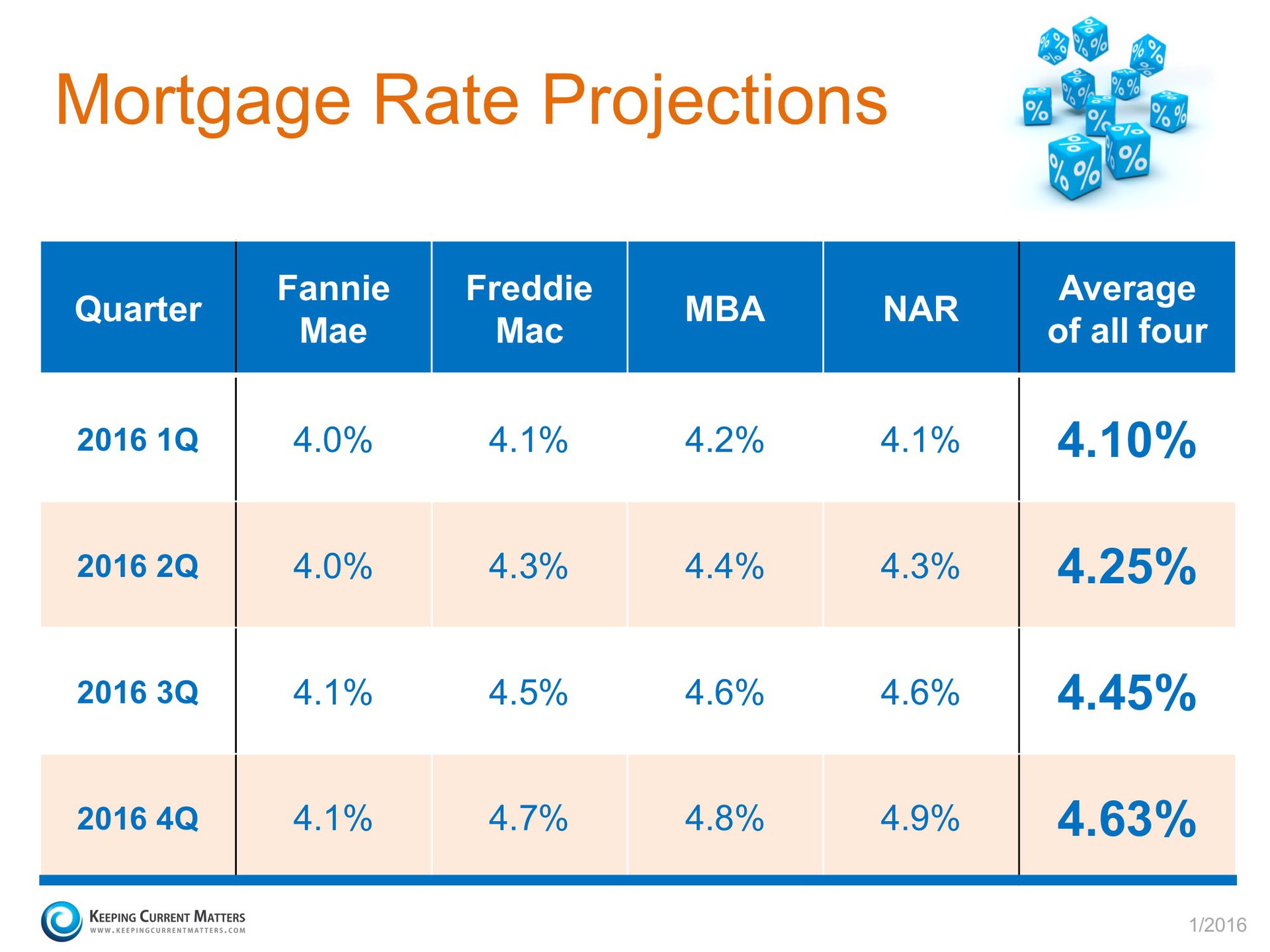
The Mortgage Bankers Association (MBA), the National Association of Realtors and Freddie Mac have all projected that mortgage interest rates will increase by approximately three-quarters of a percent over the next twelve months as you can see in the chart below:

Mortgage Rate Projections | Keeping Current Matters

Bottom Line

Only you and your family will know for certain if now is the right time to purchase a home. Answering these questions will help you make that decision.

Posted in Buying a Home
Nov. 23, 2015

Why You Should Sell Now… Before Winter Hits

People across the country are beginning to think about what their life will look like next year. It happens every Fall. We ponder whether we should relocate to a different part of the country to find better year-round weather or perhaps move across the state for better job opportunities.

Homeowners in this situation must consider whether they should sell their house now or wait. If you are one of these potential sellers, here are five important reasons to do it now versus the dead of winter.


1. Demand is Strong

Foot traffic refers to the number of people out actually physically looking at home right now. The latest foot traffic numbers show that buyers are still out in force looking for their dream home. These buyers are ready, willing and able to buy…and are in the market right now!

As we get later into the year, many people have other things (weather, holidays, etc.) that distract them from searching for a home. Take advantage of the buyer activity currently in the market.

2. There Is Less Competition Now

Housing supply is still well under the 6 months’ supply necessary for a normal market. This means that, in many markets, there are not enough homes for sale to satisfy the number of buyers in that market. This is good news for home prices. However, additional inventory is about to come to market.

There is a pent-up desire for many homeowners to move as they were unable to sell over the last few years because of a negative equity situation. Homeowners are now seeing a return to positive equity as real estate values have increased over the last two years. Many of these homes will be coming to the market in the near future.

Also, new construction of single-family homes is again beginning to increase. A study by Harris Poll revealed that 41% of buyers would prefer to buy a new home while only 21% prefer an existing home (38% had no preference).

The choices buyers have will continue to increase over the next few months. Don’t wait until all this other inventory of homes comes to market before you sell.

3. The Process Will Be Quicker

One of the biggest challenges of the housing market in recent times has been the length of time it takes from contract to closing. Banks are requiring more and more paperwork before approving a mortgage. Any delay in the process is always prolonged during the winter holiday season. Getting your house sold and closed before those delays begin will lend itself to a smoother transaction.

4. There Will Never Be a Better Time to Move-Up

If you are moving up to a larger, more expensive home, consider doing it now. Prices are projected to appreciate by over 18.1% from now to 2019. If you are moving to a higher priced home, it will wind-up costing you more in raw dollars (both in down payment and mortgage payment) if you wait. You can also lock-in your 30-year housing expense with an interest rate below 4% right now. Rates are projected to rise by this time next year.

5. It’s Time to Move On with Your Life

Look at the reason you decided to sell in the first place and determine whether it is worth waiting. Is money more important than being with family? Is money more important than your health? Is money more important than having the freedom to go on with your life the way you think you should?

Only you know the answers to the questions above. You have the power to take back control of the situation by putting your home on the market. Perhaps, the time has come for you and your family to move on and start living the life you desire.

That is what is truly important.

Why You Should Sell Now... Before Winter Hits | Simplifying The Market

Nov. 20, 2015

Sic OSU!

Good luck this weekend Bears!

Nov. 19, 2015

Should I Pay A Mortgage Interest Rate Over 4%?

Mortgage interest rates, as reported by Freddie Mac, have increased over the last several weeks. Along with Freddie Mac, Fannie Mae, the Mortgage Bankers Association and the National Association of Realtors are all calling for mortgage rates to continue to rise over the next four quarters.


This has caused some purchasers to lament the fact they may no longer be able to get a rate less than 4%. However, we must realize that current rates are still at historic lows.

Here is a chart showing the average mortgage interest rate over the last several decades.

Historic Mortgage Rates By Decade | Simplifying The Market

Bottom Line

Though you may have missed getting the lowest mortgage rate ever offered, you can still get a better interest rate than your older brother or sister did ten years ago; a lower rate than your parents did twenty years ago and a better rate than your grandparents did forty years ago.

Nov. 18, 2015

How to Get the Most Money from the Sale of Your House

Every homeowner wants to make sure they maximize the financial reward when selling their home. But, how do you guarantee that you receive maximum value for your house? Here are two keys to insuring you get the highest price possible.


1. Price it a LITTLE LOW

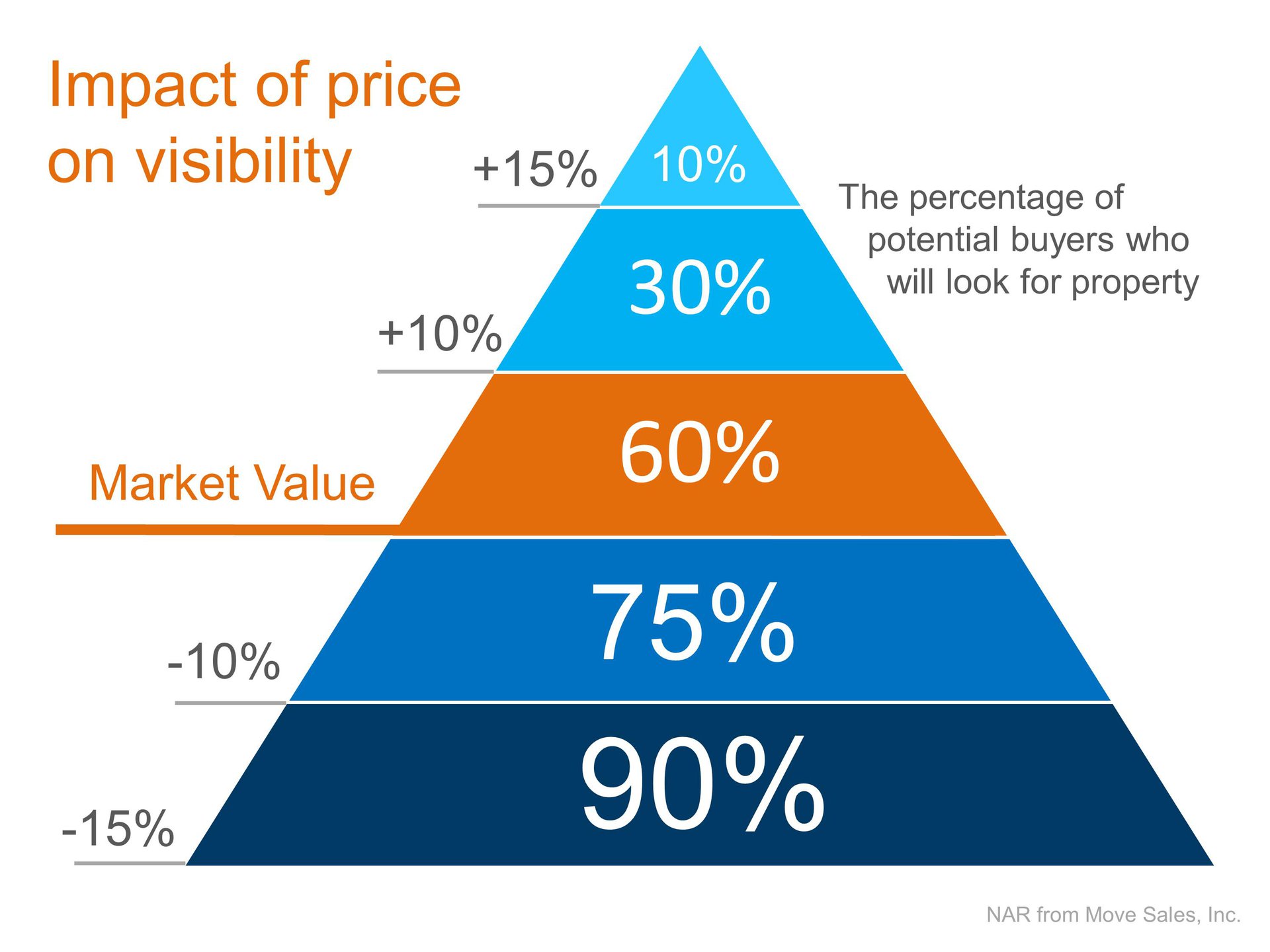
This may seem counterintuitive. However, let’s look at this concept for a moment. Many homeowners think that pricing their home a little OVER market value will leave them room for negotiation. In actuality, this just dramatically lessens the demand for your house. (see chart)

Impact of Price on Visibility | Keeping Current Matters

Instead of the seller trying to ‘win’ the negotiation with one buyer, they should price it so demand for the home is maximized. In that way, the seller will not be fighting with a buyer over the price but instead will have multiple buyers fighting with each other over the house.

In a recent article on realtor.com, they gave this advice:

“Aim to price your property at or just slightly below the going rate. Today’s buyers are highly informed, so if they sense they’re getting a deal, they’re likely to bid up a property that’s slightly underpriced, especially in areas with low inventory.”

2. Use a Real Estate Professional

This too may seem counterintuitive. The seller may think they would net more money if they didn’t have to pay a real estate commission. Yet, studies have shown that typically homes sell for more money when handled by a real estate professional.

Recent research posted by the Economists’ Outlook Blog revealed:

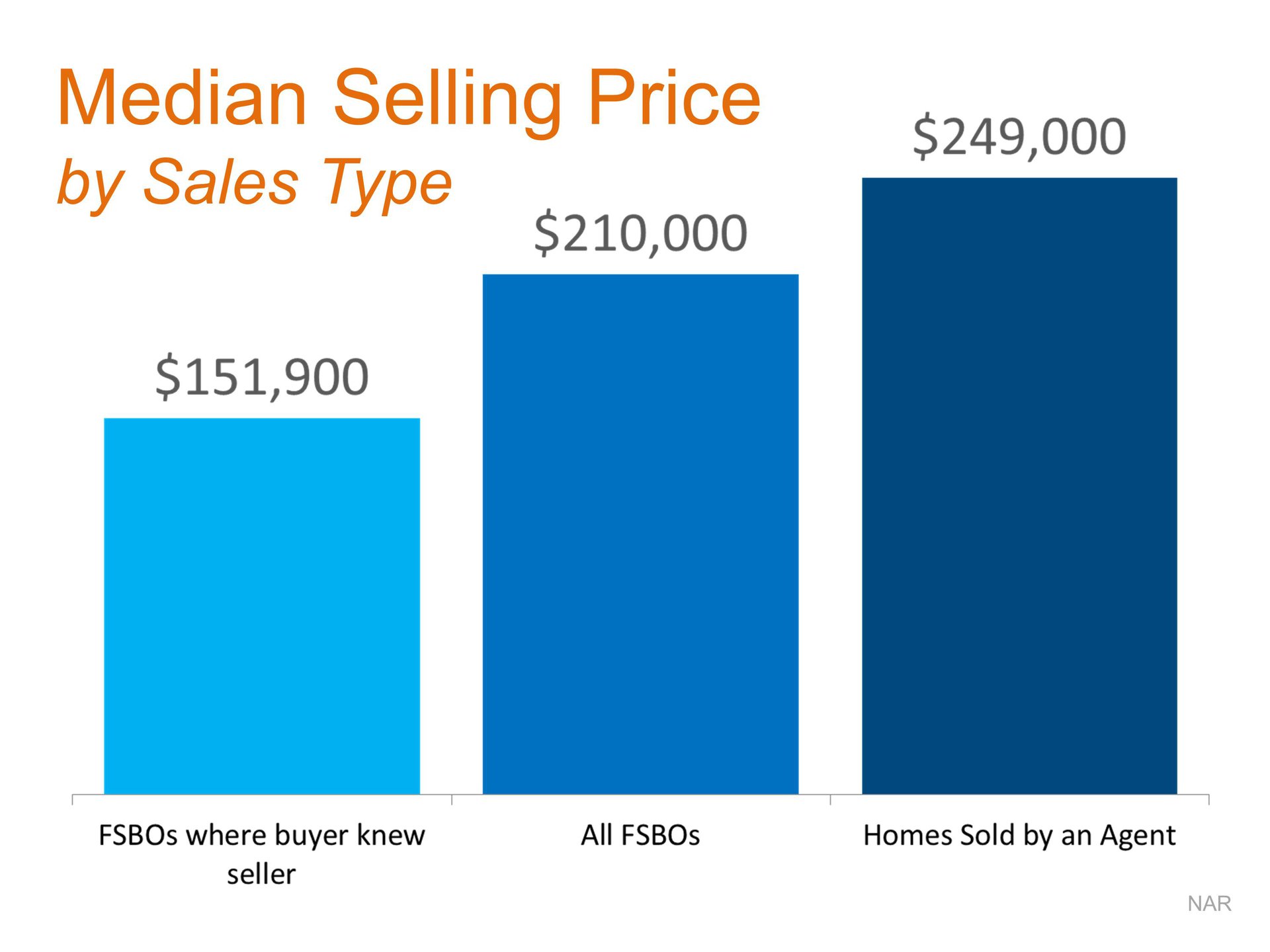
“The median selling price for all FSBO homes was $210,000 last year. When the buyer knew the seller in FSBO sales, the number sinks to the median selling price of $151,900. However, homes that were sold with the assistance of an agent had a median selling price of $249,000 – nearly $40,000 more for the typical home sale.”

Median Selling Price FSBO vs Agent | Keeping Current Matters

Bottom Line

Price it at or slightly below the current market value and hire a professional. That will guarantee you maximize the price you get for your house.

Posted in Selling Your Home
Nov. 13, 2015

Slaying Myths About Buying A Home

Slaying Myths About Buying A Home [INFOGRAPHIC] | Simplifying The Market

Posted in Buying a Home
Nov. 12, 2015

The Importance of Home Equity to a Family

There has been much written about how dramatically home values have increased over the last several years. With the increase in values, comes an increase in the equity each home owning family now has. The Joint Center of Housing Studies at Harvard University recently reported that, after taking inflation into account, aggregate home equity has increased 60% since 2010. And home equity is the major component of most family’s overall wealth.


Why is this so important?

Throughout history, families have tapped into their homes for many important reasons. Perhaps it was to get seed capital to start a new business; perhaps to help finance their children’s college education; perhaps to get needed medical attention not covered by insurance.

Up to ten years ago, families were able to use the equity in their homes to better the living situation for themselves and their family. More small businesses were created. College students weren’t forced to take on massive student debt. People could get needed medical care.

This hasn’t been the case over the last ten years as families found themselves in a position of having zero equity or, even worse, negative equity post the housing collapse. However, that is about to change.

Using your home as an ATM is not a good idea.

We realize that there are inherent risks to tapping into the equity in your home especially if you do it for the wrong reasons. Back in 2005-2007, homeowners were using their homes as their own personal ATM machine to buy depreciating assets like cars, boats and jet skis. This reckless behavior should never be repeated.

However, using your equity (aka family wealth) to invest in yourself, your children or other family members that could use help still makes sense. And the good news is that more and more families can do this as home values continue to increase.

Bottom Line

Home equity gives families an additional financial option when money is needed. The proper use of this family wealth can be used to grow generational wealth.

As Julián Castro, U.S. Secretary of HUD, recently explained:

“Generation after generation, the primary vehicle to create wealth in our country has been through homeownership. In the U.S., homeownership has provided an opportunity for one generation to hand over to the next that opportunity and that wealth.”

Nov. 11, 2015

Thank you for your service!

Posted in Celebrate Life
Nov. 3, 2015

2016: Homeowner’s Net Worth Will Be 45x Greater Than a Renter

Every three years the Federal Reserve conducts a Survey of Consumer Finances in which they collect data across all economic and social groups. The latest survey, which includes data from 2010-2013, reports that a homeowner’s net worth is 36 times greater than that of a renter ($194,500 vs. $5,400).

In a recent Forbes article the National Association of Realtors’ (NAR) Chief Economist Lawrence Yun predicts that in 2016 the net worth gap will widen even further to 45 times greater.

The graph below demonstrates the results of the last two Federal Reserve studies and Yun’s prediction:

Increasing Gap in Family Wealth | Simplifying The Market

Put Your Housing Cost to Work For You

Simply put, homeownership is a form of ‘forced savings’. Every time you pay your mortgage you are contributing to your net worth. Every time you pay your rent, you are contributing to your landlord’s net worth.

The latest National Housing Pulse Survey from NAR reveals that 80% of consumers believe that purchasing a home is a good financial decision. Yun comments:

“Though there will always be discussion about whether to buy or rent, or whether the stock market offers a bigger return than real estate, the reality is that homeowners steadily build wealth. The simplest math shouldn’t be overlooked.”

Bottom Line

If you are interested in finding out if you could put your housing cost to work for you through homeownership, let's get together and discuss your options.